April 17, 2026
TITLE: SEMINAR 2 – “Interfacial fluid flow, surface structure, microfluidics and critical element separation and recovery”
Presentation & Networking | Friday, April 17, 2026
Time | 2:00 p.m. (MST)
Location: University of Alberta, Room 8-207, Donadeo Innovation Centre for Engineering, 9211-116 Street NW, Edm.
Interfacial fluid flow and the wetting of surfaces is a key focus of this seminar. At the micro/nanoscale scale, the surface-area-to volume ratio increases dramatically. The interfacial chemistry of the surfaces, for example surface charge, can control wettability. The properties of liquids in confined spaces varies from the bulk. Controlling the interface between two immiscible fluids (like oil and water) allows for rapid mass transfer of metal ions, bypassing the slow diffusion limits of large-scale mixer settlers.
Microfluidic devices provide a platform for solvent extraction on a chip. They allow for precise control over contact time, which is essential for selectively separating elements with very similar chemical properties.
In critical element separation, the goal is to move away from energy-intensive pyrometallurgy toward continuous flow hydrometallurgy. Microfluidic systems can “tune” the extraction environment to isolate high-purity elements from complex waste streams like e-waste or brine, as well as from conventional mineral processing circuits.
The Presenter:
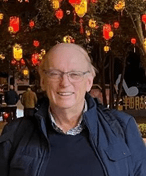
Professor John Ralston AO FAA FTSE HonFAusIMM
Adelaide University, Melbourne Australia
Dr. Ralston is a Physical and Colloid Chemist with complementary training in metallurgy, whose research interests embrace various aspects of interfacial science and engineering. In particular he asks how bubbles and particles interact, why and how fast surfaces wet and why particles stick together. Apart from mentoring several research teams at UniSA, a number of his present activities include strong interactions with universities, companies and research institutes internationally, especially in Canada, China, Europe, Africa and Japan.
NOTE: This event was made possible through the support of the Center for Energy and Mineral Processing (CEMP) and its Director Dr. Hongbo Zeng. CEMP is a hub of activities and a funding program, supporting energy and mineral processing research at U of A in collaboration with industrial partners. Email: cemp@ualberta.ca. Website: cempab.ca.

April 13, 2026
TITLE: SEMINAR 1 – “Bubbles, particles and interfaces in complex three phase separation – the science and technology underpinning flotation”
Presentation & Networking | Monday, April 13, 2026
Time | 2:00 p.m. (MST)
Location: University of Alberta, Room 8-207, Donadeo Innovation Centre for Engineering, 9211-116 Street NW, Edm.
This seminar highlights the multidisciplinary nature of froth flotation, a cornerstone of mineral processing and recycling. The complex process relies on the successful collision, attachment, and stabilization of air bubbles and particles within a slurry. The complexity stems from three intersecting fields:
- Fluid Dynamics: governs the probability of bubble-particle collision within turbulent or laminar flows.
- Interfacial Chemistry: determines the hydrophobicity of particles (often modified by chemical collectors) to ensure they “stick” to the bubble.
- Physics: involves the thin-film drainage between the bubble and particle, which must rupture for successful attachment to occur.
Applying this science allows scientists and engineers to optimize recovery rates and selectivity, ensuring valuable minerals are separated from waste (gangue) or that different types of plastics or battery components are sorted during recycling. Mineralogy, water chemistry, grinding, the degree of liberation and the very different behaviours of fine and coarse particles play a major role in effective separation of valuable minerals from ores and components in recycling.
The Presenter:
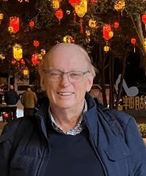
Professor John Ralston AO FAA FTSE HonFAusIMM
Adelaide University, Melbourne Australia
Dr. Ralston is a Physical and Colloid Chemist with complementary training in metallurgy, whose research interests embrace various aspects of interfacial science and engineering. In particular he asks how bubbles and particles interact, why and how fast surfaces wet and why particles stick together. Apart from mentoring several research teams at UniSA, a number of his present activities include strong interactions with universities, companies and research institutes internationally, especially in Canada, China, Europe, Africa and Japan.
NOTE: This event was made possible through the support of the Center for Energy and Mineral Processing (CEMP) and its Director Dr. Hongbo Zeng. CEMP is a hub of activities and a funding program, supporting energy and mineral processing research at U of A in collaboration with industrial partners. Email: cemp@ualberta.ca. Website: cempab.ca.
PAST EVENTS
January 9, 2026
TITLE: “Reducing environmental impacts and improving economic prospects for lithium commodities produced with chemically integrated post-combustion capture of carbon dioxide”
Presentation & Networking | Friday, January 9, 2026
Time | 3:00 p.m. (MST)
Place | University of Alberta, Room 8-207, Donadeo Innovation Centre for Engineering (DICE)
On behalf of the University of Alberta, the Centre for Energy and Mineral Processing (CEMP) is pleased to invite you to a presentation and discussion sponsored by the Faculty of Engineering on Reducing Environmental Impacts and Improving Economic Prospects for Lithium Commodities Produced with Chemically Integrated Post-Combustion Capture of Carbon Dioxide.
The Presenter:
Dr. Lindsay Hounjet is a Research Scientist with Natural Resources Canada operating out of CanmetENERGY in Devon, Alberta. He received a BSc in chemistry from the University of Saskatchewan in 2006, a PhD in inorganic chemistry from the University of Alberta in 2011, and undertook post-doctoral research in metal-free, small-molecule activation and catalysis at the University of Toronto until 2013. In 2014, Dr. Hounjet joined Natural Resources Canada, where he began investigating impacts of crude oil spills on aquatic systems. He contributed to the development of federal policies and regulations that ensure safe and effective crude oil transportation and spill response. He improved technology needed to better utilize renewable energy resources by strengthening the applicability of emerging sodium-ion batteries within stationary energy storage systems. He spearheaded innovative research projects that bolster economic incentive for capturing carbon dioxide from combustion exhaust to help achieve federal emissions targets. He actively develops innovative technologies that generate valuable critical mineral commodities from abundant resources, providing a competitive edge to Canada’s private sector.
October 22, 2025
TITLE: “Opportunities for Critical Mineral Production and Advanced Material Innovation in Alberta”
Presentation & Networking | Wednesday, October 22, 2025
Time | 4:00 to 5:30 p.m.
Place | University of Alberta
On behalf of the University of Alberta, the Centre for Energy and Mineral Processing (CEMP) is pleased to invite you to a presentation and discussion on Opportunities for Critical Mineral Production and Advanced Material Innovation in Alberta.
Dr. John Zhou will present a summary of a recently released Alberta Innovates and Emissions Reduction Alberta critical mineral production and advanced material innovation report. He will highlight opportunities in this space for both researchers and industrial innovators and answer questions from the audience.
Hear how Alberta is poised to take advantage of significant new opportunities with untapped reserves of lithium, vanadium, titanium, and zirconium, and the vast potential to transform bitumen into billion-dollar products like synthetic graphite, carbon fiber, and hard carbon. As the world shifts toward electrification, clean energy, and high-tech infrastructure, Alberta’s unique geological resources and innovation ecosystem offer game-changing opportunities—lithium extraction from oilfield brine alone could spark a multi-billion-dollar industry, while asphaltene-rich bitumen may be the key to low-cost, low-emission advanced materials. With strategic investments and continued support from Alberta Innovates and Emissions Reduction Alberta, the province stands ready to become a leader in sustainable supply chains and advanced materials manufacturing.
The presentation and discussion will be followed directly by networking with light snacks and refreshments.
Please RSVP on or before 3:00 PM, Friday, October 17, 2025.
We hope to see you at the session!
For more Details and to RSVP NOW go to: https://app.groupize.com/e/opportunities-for-critical-mineral-production-and-advanced-material-innovation-in-alberta-seminar
 Centre for Energy and Mineral Processing (CEMP)